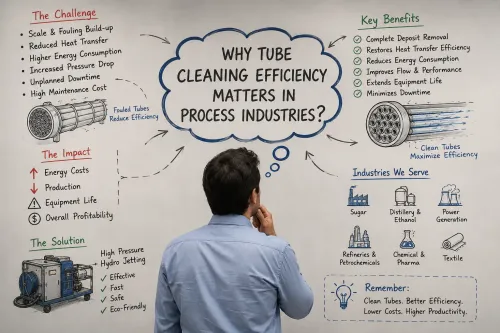

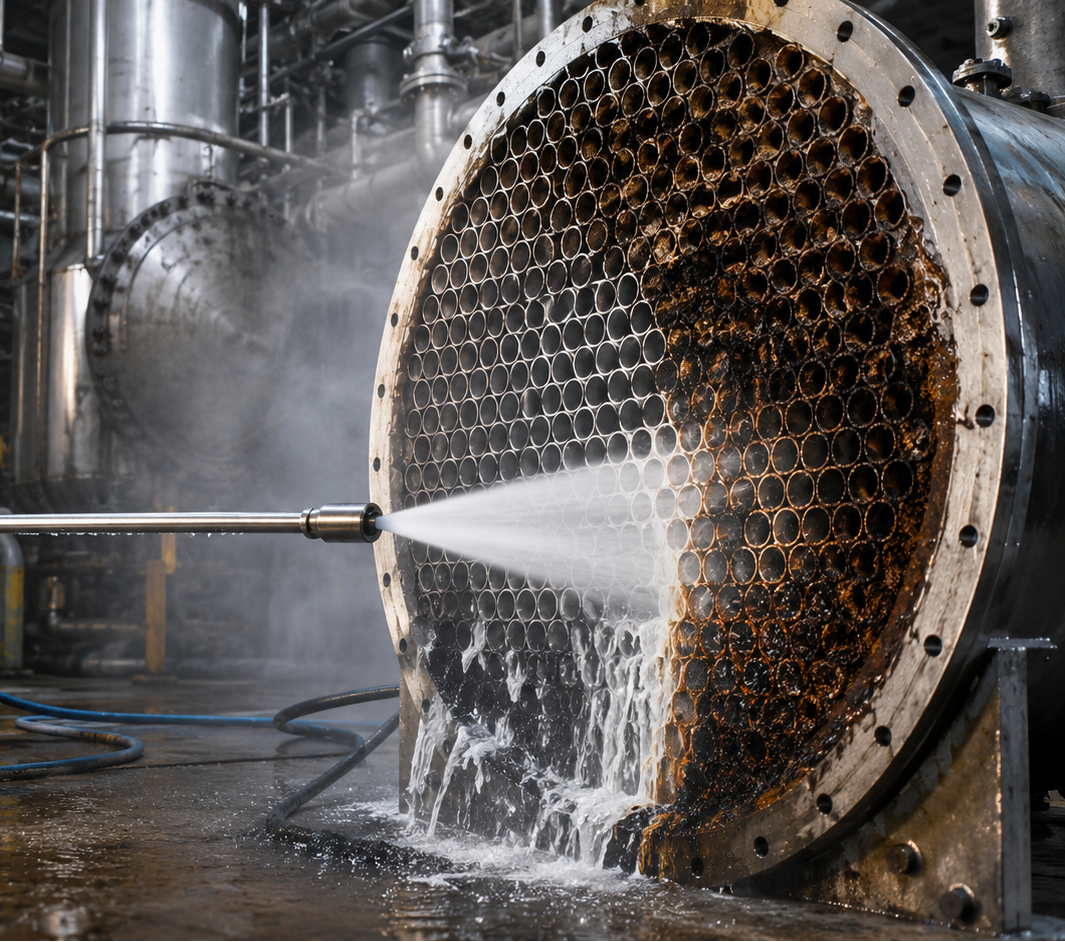
Heat exchangers are one of the most critical pieces of equipment in industries such as sugar, distillery, ethanol, refinery, chemical, pharma, textile, and power plants. Their performance directly affects production efficiency, energy consumption, and plant reliability.
However, many industries still face repeated problems even after cleaning because of improper cleaning methods, wrong equipment selection, or poor maintenance practices.
1. Delaying Cleaning Until Severe Choking Occurs
One of the biggest mistakes industries make is waiting too long before cleaning the heat exchanger.
Problems Caused:
• Heavy scale and sludge buildup
• Reduced heat transfer efficiency
• Increased steam consumption
• Higher pressure drop
• Production losses
• Risk of tube damage
Best Practice:
Schedule preventive cleaning before performance drops significantly. Regular inspection and monitoring help avoid emergency shutdowns.
2. Using Incorrect Cleaning Pressure
Many operators either use:
• Too low pressure → ineffective cleaning
• Too high pressure → tube damage
Improper pressure selection can damage tube walls, reduce tube life, and even cause leakages.
Best Practice:
Use the correct hydro jetting pressure based on:
• Tube material
• Deposit type
• Tube thickness
• Application requirement
• Cleaning Frequency
3. Choosing the Wrong Nozzle
The nozzle plays a major role in cleaning performance.
Common Errors:
• Wrong jet angle
• Incorrect nozzle size
• Using worn-out nozzles
This leads to incomplete cleaning and increased cleaning time.
Best Practice:
Select nozzles according to:
• Tube Inner diameter
• Nature of deposits
• Required cleaning speed
• Pressure and flow combination
Correct nozzle selection improves cleaning efficiency significantly.
4. Using Chemical Cleaning Without Proper Evaluation
Many industries rely heavily on chemical cleaning without understanding its long-term impact.
Risks:
• Tube corrosion
• Chemical handling hazards
• Environmental issues
• Incomplete hard scale removal
Better Alternative:
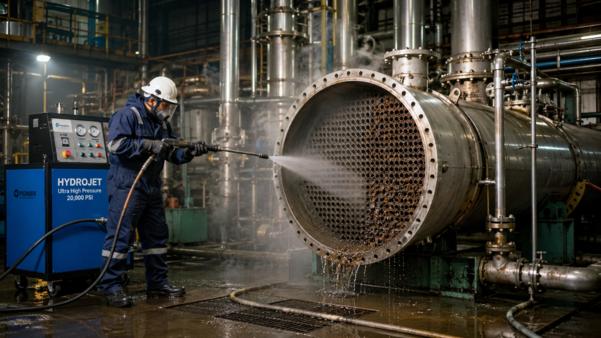
High pressure hydro jetting is often safer and more effective for removing:
• Hard scale
• Sludge
• Molasses deposits
• Process fouling
5. Using Low-Quality Hydro Jetting Equipment
Low-quality or poorly maintained machines often create:
• Pressure fluctuations
• Frequent breakdowns
• Reduced cleaning efficiency
• Higher maintenance cost
Best Practice:
Use reliable industrial hydro jetting systems designed for continuous operation and industrial applications.
A best hydro jetting system provides:
• Stable pressure
• Better cleaning performance
• Longer machine life
• Reduced downtime