

In process industries such as Sugar, Distillery, Ethanol, Textile, Chemical, Pharmaceutical, Power Plant, and Refineries, heat transfer equipment plays a critical role in maintaining production efficiency. Heat exchangers, condensers, evaporators, juice heaters, and boilers rely on clean tubes to transfer heat effectively.
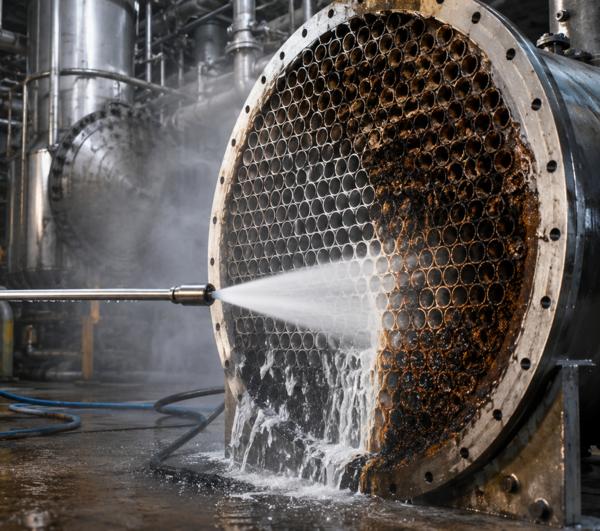
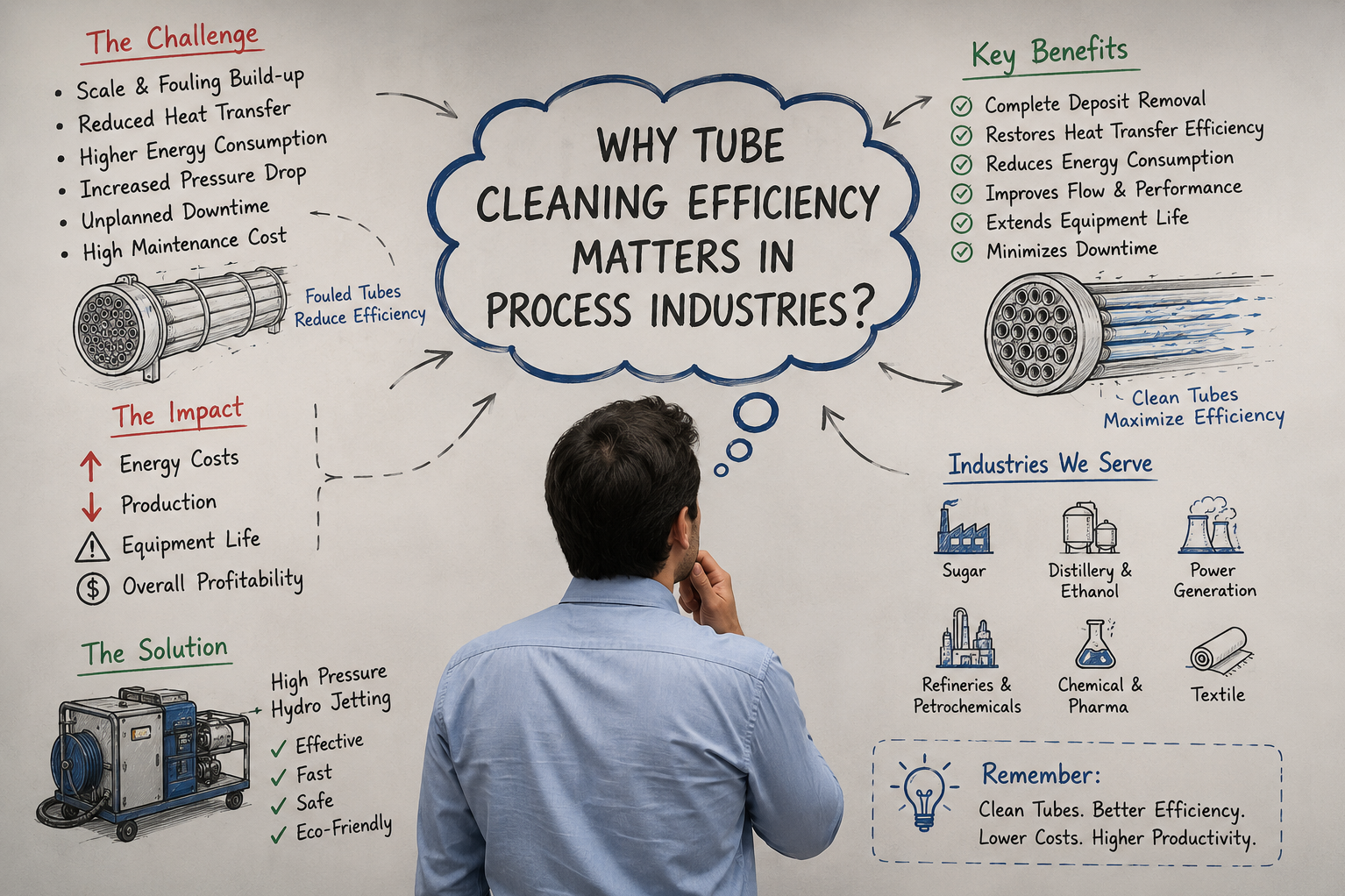
However, over time, scale, sludge, fouling, deposits, and process contaminants accumulate inside the tubes. Even a thin layer of deposit can significantly reduce heat transfer efficiency, resulting in increased energy consumption, reduced production capacity, higher operating costs, and unexpected shutdowns.
This is why tube cleaning efficiency is not just a maintenance activity—it is a direct contributor to plant profitability.
The Hidden Cost of Fouled Tubes:
When tubes become clogged or coated with deposits, several operational problems occur:
1. Reduced Heat Transfer Efficiency
Deposits act as insulation between the process fluid and the tube surface. As a result, equipment requires more energy to achieve the same heat transfer performance.
2. Increased Energy Consumption
Plants often compensate for reduced efficiency by increasing steam, fuel, or electricity consumption, leading to higher operating costs.
3. Production Losses
Poor heat transfer can slow down evaporation, condensation, and heating processes, directly affecting plant throughput.
4. Higher Maintenance Costs
Severely fouled tubes may require frequent shutdowns, chemical cleaning, or even tube replacement.
5. Unplanned Downtime
Unexpected equipment failures due to blocked tubes can interrupt production schedules and impact profitability.
Why Cleaning Efficiency Matters?
Many maintenance teams focus on whether tubes are cleaned or not. However, the real question should be:
How effectively are the tubes being cleaned?
A partially cleaned tube still contains deposits that restrict flow and reduce heat transfer performance.
High cleaning efficiency ensures:
• Complete removal of scale and deposits
• Restoration of original flow characteristics
• Improved heat transfer rates
• Reduced pressure drop across equipment
• Longer equipment life
• Improved plant reliability
The difference between 70% cleaning and 100% cleaning can translate into substantial energy savings and production gains.
Importance of Hydro Jetting Machines:
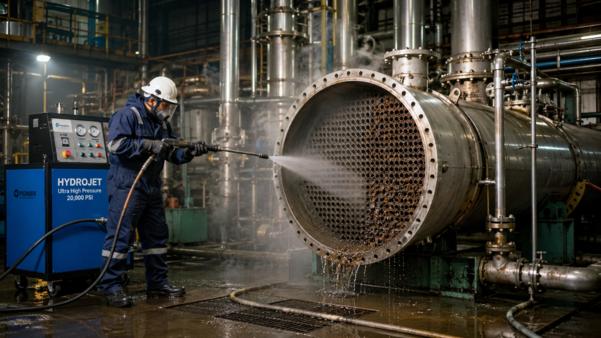
A professional Hydro Jetting Machine is the heart of an efficient tube cleaning operation.
1. High Cleaning Power
Modern hydro jetting systems generate pressures up to 20, 000 PSI or higher, enabling removal of even the toughest deposits.
2. Faster Cleaning Cycles
High-pressure water significantly reduces cleaning time compared to manual or chemical cleaning methods.
3. Improved Safety
Automated and semi-automated systems reduce operator exposure to hazardous maintenance activities.
4. Environmental Benefits
Hydro jetting uses water as the cleaning medium, minimizing chemical usage and reducing environmental impact.
5. Cost Savings
By restoring equipment performance quickly and effectively, hydro jetting reduces downtime and operating costs.
Conclusion:
Tube cleaning efficiency directly impacts plant performance, energy consumption, and maintenance costs. As industries continue to focus on productivity and operational excellence, efficient tube cleaning has become more important than ever.
High-Pressure Hydro Jetting provides a proven solution for restoring equipment performance, minimizing downtime, and improving overall plant efficiency. By investing in the right hydro jetting technology, process industries can achieve cleaner tubes, better heat transfer, lower operating costs, and higher profitability.
In today's competitive industrial environment, effective tube cleaning is not merely maintenance—it is a strategic investment in operational success.