
Introduction
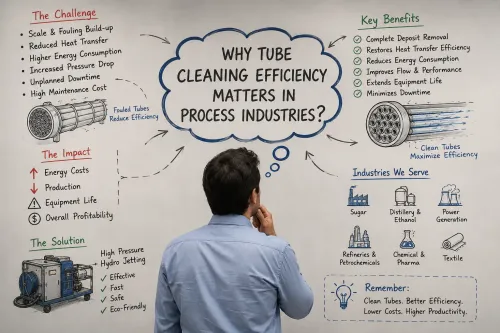
Industrial cleaning and maintenance are critical for maintaining operational efficiency, reducing downtime, and increasing the lifespan of equipment. Over time, process equipment such as heat exchangers, condensers, evaporators, pipelines, reactors, boilers, tanks, and industrial surfaces accumulate hard deposits, scale, sludge, chemical residues, and other contaminants.
Traditional cleaning methods such as manual cleaning, chemical cleaning, rodding, or mechanical scraping are often time-consuming, labor-intensive, and less effective for stubborn deposits. This is where Hydro Jetting becomes one of the most powerful and efficient industrial cleaning technologies.
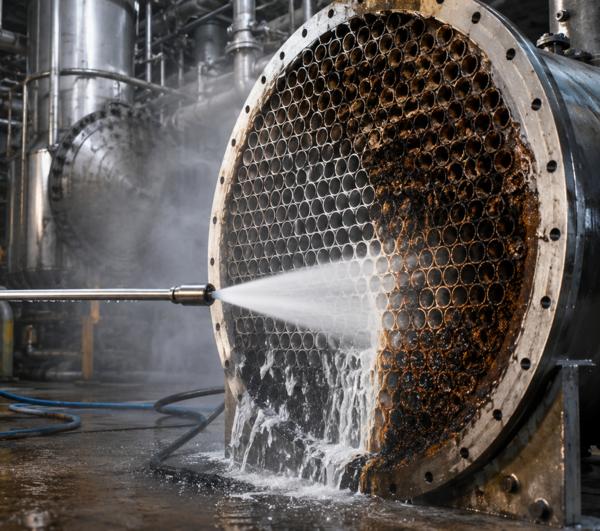
Hydro jetting uses high-pressure water streams to remove deposits, scale, dirt, blockages, and contaminants from industrial equipment and surfaces without damaging the base material when performed correctly.
Today, hydro jetting is widely used across industries such as:
• Sugar Industry
• Refineries
• Distilleries
• Chemical Plants
• Pharma Industry
• Textile Industry
• Food Processing Plants
• Bio-Fuel Plants
• Ethanol Plants
• Solvant Extraction Plant
• Power Plants
• Hydro Jetting Contractors
What is Hydro Jetting?
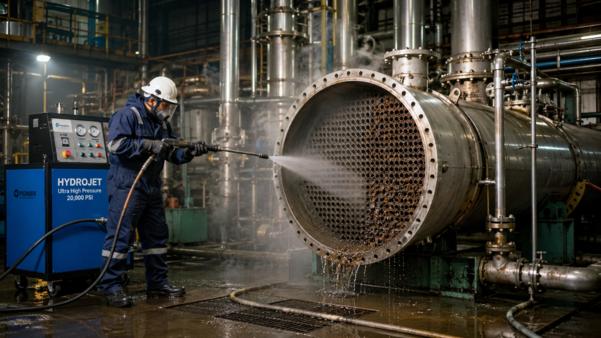
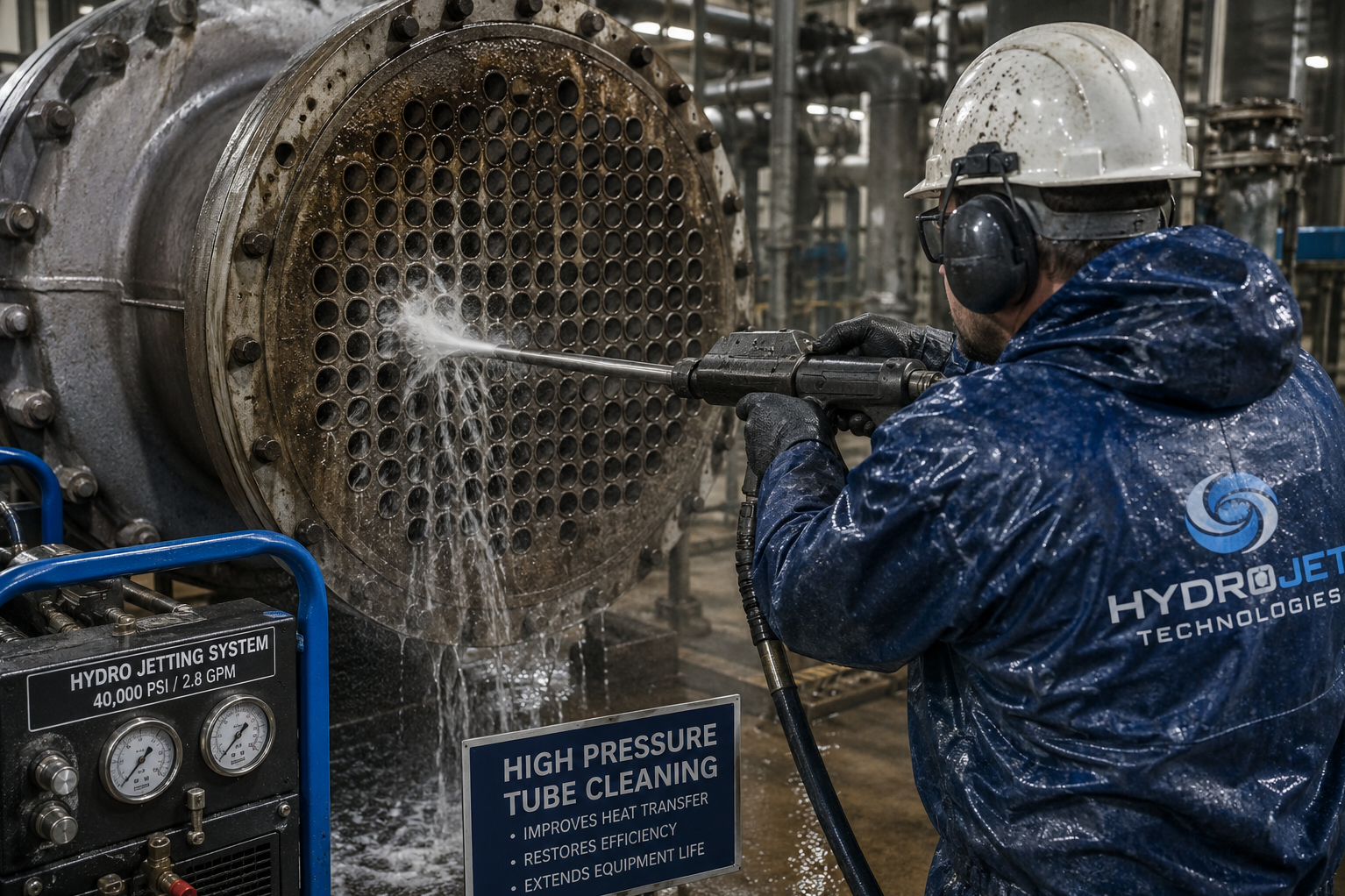
Hydro jetting, also known as High Pressure Water Jetting, is an industrial cleaning process that uses highly pressurized water to remove deposits, blockages, scale, sludge, coatings, and contaminants from internal passages.
The water pressure can range from:
• Upto 5000 PSI for light scale removal
• 5, 000–10, 000 PSI for medium scale removal
• Up to 20, 000 PSI or more for heavy-duty industrial descaling and HydroJetting applications
The process involves a high-pressure plunger pump that pressurizes water and delivers it through specialized hoses, nozzles, lances, or automated cleaning systems.
Hydro jetting is considered one of the safest and most environmentally friendly cleaning methods because it primarily uses water instead of aggressive chemicals.
How Does Hydro Jetting Work?
The hydro jetting process involves several components working together.
1. High Pressure Pump
The heart of the hydro jetting system is the high-pressure triplex plunger pump. The pump increases water pressure and supplies continuous high-pressure flow.
2. High Pressure Hose
Specialized high-pressure hoses transfer pressurized water from the pump to the cleaning tool.
3. Nozzles
Nozzles play a critical role in cleaning efficiency. Different nozzle designs are used for:
• Evaporator Tube cleaning
• Pipe cleaning
• Condenser Tube Cleaning
• Calandria Tube Cleaning
4. Cleaning Accessories
Additional accessories include:
• Foot Operated valves
• Safety valves
• Lances
• Rotary nozzles
• Flow Divider Valves
5. Water Jet Impact
The high-velocity water impacts the deposit surface and breaks down:
• Scale
• Sludge
• Carbon deposits
• Chemical residues
The removed contaminants are flushed away by the water flow.
Types of Hydro Jetting Applications:
Hydro jetting has a wide range of industrial applications.
1. Heat Exchanger Tube Cleaning
Heat exchangers often suffer from scale formation inside tubes, reducing heat transfer efficiency.
Hydro jetting removes:
• Hard scale
• Salt deposits
• Sludge
• Fouling
• Process residues
Benefits include:
• Improved heat transfer
• Reduced energy consumption
• Better production efficiency
• Lower shutdown time
2. Condenser Tube Cleaning
Power plants and process industries use hydro jetting for condenser maintenance to maintain cooling efficiency.
3. Pipeline Cleaning
Pipelines accumulate sludge, grease, and process deposits over time.
Hydro jetting helps restore pipeline flow capacity without dismantling pipelines.
4. Evaporator Cleaning
Industries such as sugar, ethanol, and distilleries use hydro jetting to clean evaporator tubes and bodies.
5. Boiler Cleaning
Boilers accumulate ash, scale, and deposits that reduce efficiency.
Hydro jetting restores operational performance.
Benefits of Hydro Jetting:
Hydro jetting offers several advantages over conventional cleaning methods.
1. Highly Effective Cleaning
Hydro jetting can remove extremely hard deposits that are difficult to clean using manual or chemical methods.
It provides deep and uniform cleaning.
2. Reduces Equipment Downtime
Faster cleaning means reduced shutdown duration.
This helps industries:
• Increase productivity
• Reduce maintenance costs
• Improve plant availability
3. Environment Friendly
Unlike chemical cleaning, hydro jetting mainly uses water.
Benefits include:
• Reduced chemical usage
• Lower environmental impact
• Safer disposal process
• Reduced hazardous waste generation
4. Improves Heat Transfer Efficiency
Clean tubes and surfaces improve thermal efficiency.
This directly impacts:
• Steam consumption
• Energy savings
• Process efficiency
• Production output
5. Non-Destructive Cleaning
When proper pressure and nozzle selection are used, hydro jetting cleans deposits without damaging the equipment surface.
6. Versatile Application
Hydro jetting can be used for:
• Tubes
• Pipes
• Heat exchangers
• Condensers
• Calandrias
• MEE Cleaning
7. Safer for Workers
Modern hydro jetting systems include safety features such as:
• Foot control valves
• Burst protection
• Safety relief valves
8. Cost Effective Maintenance Solution
Although the initial system investment may be higher, hydro jetting significantly reduces:
• Cleaning time
• Labor costs
• Chemical costs
• Equipment replacement costs
• Production losses due to downtime