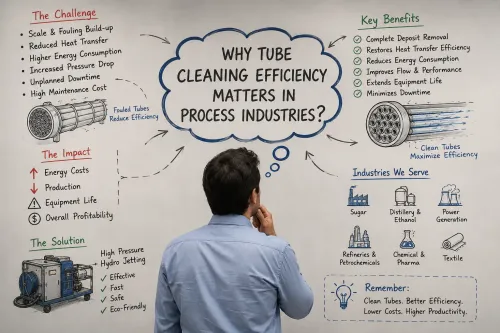

Industrial equipment such as heat exchangers, falling film evaporators, condensers, calandrias, MEE Tubes, pipelines and boilers continuously accumulate scale, sludge, carbon deposits, process residues, and fouling. If cleaning is not performed properly, industries face reduced efficiency, higher energy consumption, production losses, and unexpected shutdowns.
The three most common industrial cleaning methods are:
Manual Cleaning
Chemical Cleaning
Hydro Jetting Cleaning
Each method has its own advantages and limitations. However, in modern industries where safety, efficiency, downtime reduction, and environmental compliance are critical, hydro jetting has become the preferred industrial cleaning solution across sectors such as sugar, refinery, ethanol, chemical, textile, food, pharma, power plants, and process industries.
Refer Below detailed comparison table with parameters that industries consider while selecting a cleaning method.
Manual Cleaning
Manual cleaning is a traditional industrial cleaning method where operators use hand tools, brushes, rods, scrapers, or mechanical devices to remove scale, sludge, and deposits from industrial equipment surfaces. It is commonly used for basic maintenance activities and light cleaning applications in smaller systems.
Limitations of Manual Cleaning:
• Time-consuming cleaning process
• Requires high manpower involvement
• Inconsistent cleaning quality depending on operator skill
• Difficult to clean narrow tubes and complex geometries
• High equipment shutdown duration
• Increased confined space entry risks
• Possibility of surface scratches and mechanical damage
• Poor efficiency against hard scale and stubborn deposits
• Higher long-term labor costs
• Limited productivity improvement in large industries
Chemical Cleaning:
Chemical cleaning uses acids, alkalis, solvents, or specialized chemical solutions to dissolve scale, corrosion, fouling, and process deposits from industrial equipment. This method is often used where deposits are chemically reactive and difficult to remove manually.
Limitations of Chemical Cleaning:
• Risk of chemical corrosion on equipment surfaces
• Hazardous chemical handling and worker safety concerns
• Environmental disposal and compliance challenges
• High recurring chemical procurement costs
• Limited effectiveness on non-reactive hard deposits
• Requires strict process monitoring and expertise
• Toxic fumes and exposure risks during operation
• Cleaning performance depends on chemical compatibility
• Additional neutralization and flushing processes required
• Retubing will be required
Hydro Jetting Cleaning:
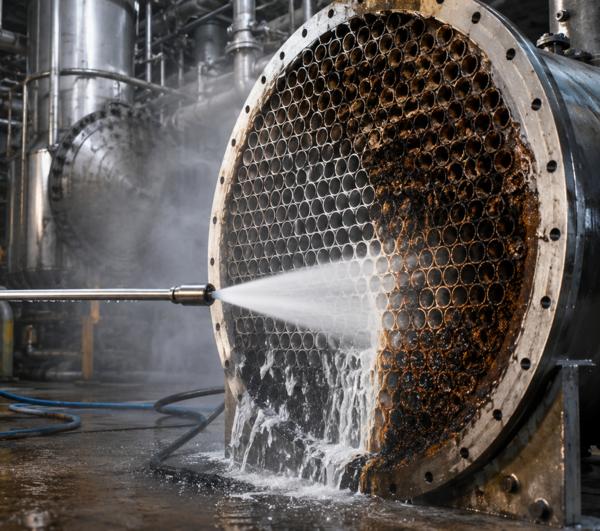
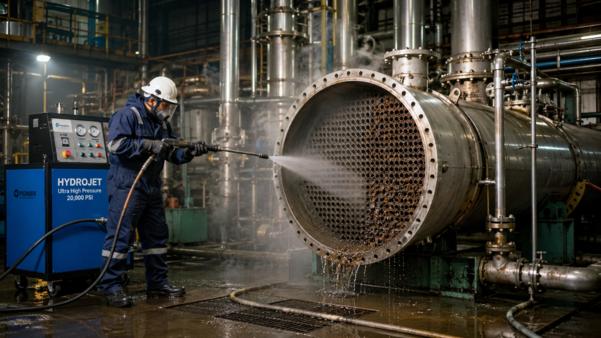
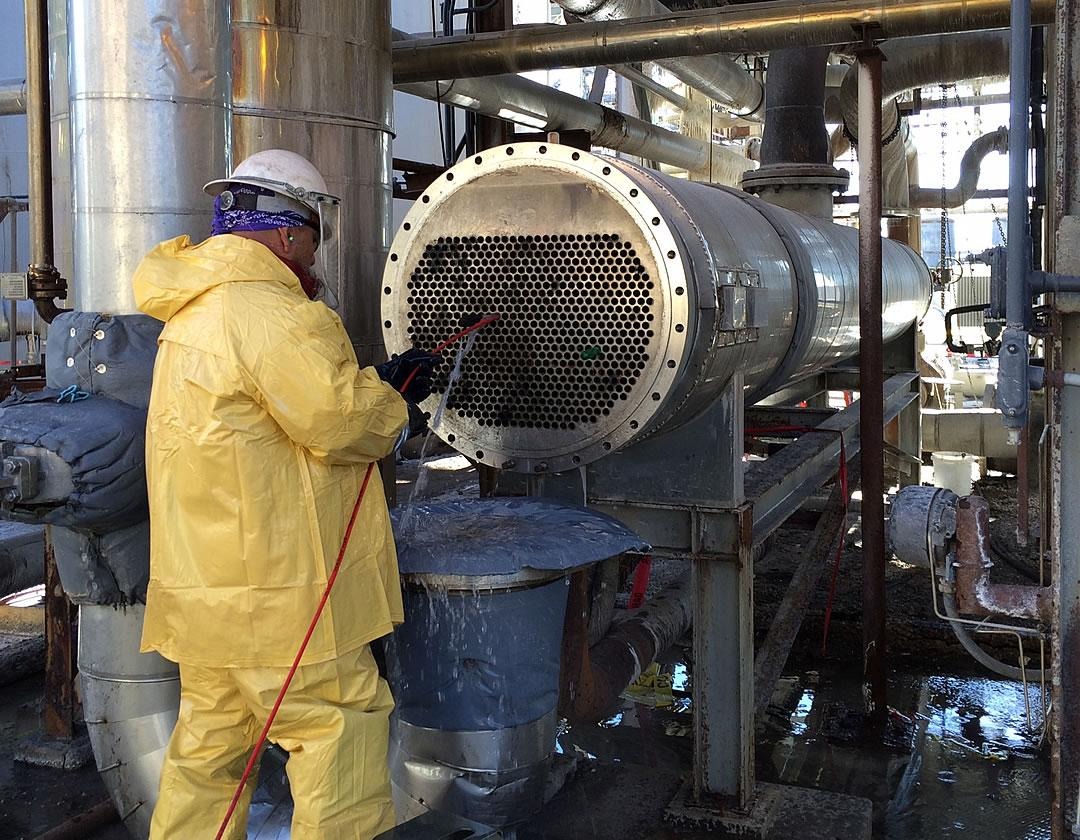
Hydro jetting is an advanced industrial cleaning process that uses high-pressure water jets to remove scale, sludge, fouling, and blockages from industrial equipment. It is widely used for cleaning heat exchangers, condensers, evaporators, boilers, pipelines, and process equipment across multiple industries.
Benefits of Hydro Jetting:
• Superior cleaning efficiency for hard scale and deposits
• Faster cleaning process with reduced downtime
• Environmentally friendly cleaning method
• Zero use of hazardous chemicals
• Safe for equipment when proper pressure is selected
• Excellent cleaning for tubes, pipelines, and narrow passages
• Consistent and repeatable cleaning quality
• Improves heat transfer efficiency and plant productivity
• Reduces long-term maintenance and operational costs
• Lower manpower requirement compared to manual cleaning
• Suitable for multiple industrial applications
• Helps extend equipment operational life
• Reduces production losses during shutdown maintenance
• Effective for both internal and external surface cleaning
• Preferred modern cleaning technology in process industries